From Drawings to Experience: Showcasing Architecture in 360°
- Muralidharan S
- Apr 13
- 2 min read
Introduction
Architecture has always been about creating spaces, but presenting those spaces has remained a challenge.
Traditional tools like drawings, blueprints, and renders often require clients to imagine the final outcome. This gap between design and understanding can lead to confusion, delays, and revisions.
Today, architects are closing that gap by moving from drawings to immersive experiences using 360° virtual tours.
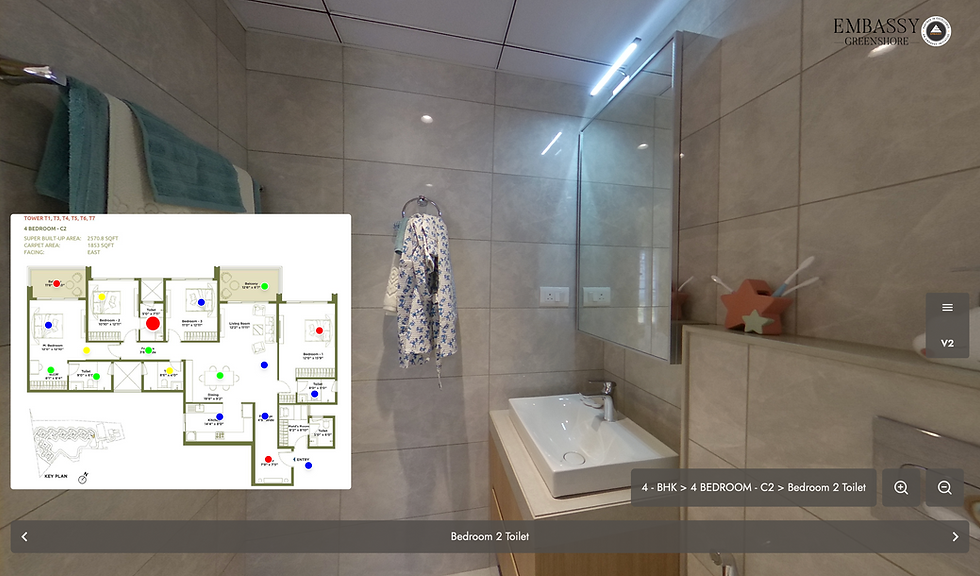
The Limitations of Traditional Architectural Presentation
For decades, architects have relied on:
2D drawings and floor plans
Static 3D renders
Physical walkthroughs
While essential, these methods:
lack real spatial immersion
depend on client interpretation
fail to communicate movement and flow
Not every client can visualize a space from drawings alone.
What Does “Architecture in 360°” Mean?
360° architectural experiences allow users to:
explore spaces interactively
navigate through rooms
understand scale, depth, and layout
Instead of viewing a design, clients can experience it.
From Drawings to Experience: What’s Changing?
1. From Static to Interactive
Architectural presentations are no longer passive.
Clients can move through spaces, look around, and engage with the design.
2. From Explanation to Exploration
Instead of explaining every detail:
Architects let clients explore the design themselves.
3. From Guesswork to Clarity
360° walkthroughs remove ambiguity and provide a realistic sense of space.
How Architects Showcase Designs Using 360° Virtual Tours
Design Presentations
Present concepts in a fully immersive format instead of static slides.
Client Approvals
Help clients understand layouts clearly, leading to faster approvals.
Remote Presentations
Share designs with clients across locations without physical meetings.
Portfolio Showcase
Display projects in a more engaging and professional format.
Key Benefits for Architects
✅ Better Visualization
Clients experience spaces instead of imagining them.
✅ Faster Decision-Making
Clear understanding leads to quicker approvals.
✅ Reduced Revisions
Fewer misunderstandings mean fewer changes.
✅ Stronger Client Confidence
Immersive experiences build trust and clarity.
✅ Competitive Advantage
Stand out by offering next-generation presentations.
How to Create 360° Architectural Experiences
Capture or render 360° images
Upload them to a virtual tour platform
Connect scenes into a walkthrough
Add navigation and interactive elements
Share with clients
Using tools like RevsSpace, architects can easily transform designs into interactive experiences without complex workflows.
Enhancing Client Experience with 360° Tours
360° virtual tours allow clients to:
revisit designs anytime
explore at their own pace
understand spatial relationships clearly
This leads to better communication and more confident decisions.
The Future of Architectural Presentation
The shift is clear:
from drawings to immersive experiences
As technology evolves, clients will expect more than static visuals. Architects who adopt 360° presentations early will have a significant advantage.
Conclusion
Architecture is no longer just about designing spaces — it’s about helping people experience them.
360° virtual tours bridge the gap between concept and reality, making architectural presentations clearer, faster, and more impactful.
Start Showcasing Your Designs in 360°
If you're looking to move beyond drawings and create immersive design experiences, platforms like RevsSpace can help you create, share, and manage 360° virtual tours with ease.
